Friday, February 13, 2015

15. Bathroom in Winter

It's February, the end of winter and the shortest month in the year. February has only 28 days (29 days in a leap year). The Ancient Roman calendar begins in March and ends with December, the rest of the winter days were left off, not counted for agriculture. January and February were added later. It seems like February just got the leftovers. Nobody knows exactly why, but we don't mind having a shortest winter month anyway. And this winter, I experienced something interesting from the bathrooms.

guest bathroom

This is the second winter in the house coated with ceramic insulation. Ceramic Insulation Coating controls heat flow to keep cool in summer and warm in winter. There are several products, and we chose GAINA.

We have a nice warm house in winter now, and the bathrooms are the warmest place in our house, Our bathrooms don't have any windows. Since windows are one of the main reasons for heat loss, it's natural to think the place without windows should have less temperature change. But...GAINA made a big difference.

The walls and ceiling of the bathrooms were coated, they stay at a comfortable temperature and have nice soft air. A lot of people start and end everyday in the bathroom. Many would love to have a good quality bathroom. So, how about the bathroom with a window in an existing building. Does GAINA work there also?

guest room
Well, our guest room at the north-side of the house has two windows. In this room, I noticed that the air is soft and clean, but felt a little bit cooler. Ceramic Insulation Coating is not a heater. To warm up, the room needs a heat source.

For example, there are two rooms, exactly the same, but one room was coated with Gaina and the other with regular paint. After both doors are closed, both rooms lose heat from windows and the temperature drops. The difference is, the GAINA coated room loses heat slower than the other room, and when the heater turns on, the temperature immediately rises. That's what leads to energy conservation and saving money. How much lost or gained temperature depends on the houses and buildings. Climate doesn't seem to matter. I think this product has a lot of potential and value.

Right now there are no international standards to represent GAINA, authority's are working to establish those standards. Some may have differing opinions of ceramic insulation coating. Eventually the truth will come out.

Ancient Roman people were less active in the winter months. For centuries people survived cold winters by saving food and staying indoors. This seems like hibernation to me. Now-a-days we stay very active during the cold months because we have better heating available. Sadly however, we waste a lot of energy. We need to find a global solution for conserving energy and preventing further global warming. GAINA is designed to be part of the solution, not the problem.

Friday, January 16, 2015

14. Adding Insulation Materials

Adding insulation is very effective for saving energy. It keeps the inside of the house warm or cool while spending less on energy bills. Some of my friends installed thermal insulation material on their walls and ceiling and got good results. However, I thought, "It's for old houses, not for my house."

My husband and I purchased a newly built house with insulation already installed. I thought today's insulation performance of new houses was up to date in the market. So insulation wasn't on my mind. I was rather interested in a better price. How many people would care for insulation performance when purchase a newly house anyway?

Home builders and developers have to contend with building costs in the sales market. The house must have the appropriate price for what consumers want. Most builders and building suppliers put forth a lot of effort to find feasible construction costs, while adhering to building codes. These are the minimum standards for the site, equipment, and structure. Application of these building codes protect peoples lives, health and property.

Naturally, builders commonly use popular insulating materials that are inexpensive and easily installed. The construction permit assures some insulation, not necessarily the best performing material. Unfortunately, some builders may not have accurate knowledge about the products they choose and assume that it is good enough to just install any type of insulation that meets minimum requirements, which may lead to inadequate performance and sloppy work.

In any case, it's good to remember that meeting the minimum requirements of building codes does not fully guarantee quality. To obtain a higher level of energy efficiency, it is preferable to prepare the interior walls and ceiling prior to building completion. It would be nice to have the option of different types of insulation materials before purchasing a house. How much more initial cost would there be compared to the long-term saving on future energy bills?  After all, we have to pay both the mortgage and energy bills every month. However, providing such comparisons involves so much work, this doesn't happen. Our goal here at Gaina is to provide as much information as possible to ignite customer interest about the performance levels of different types of insulating products and show the savings of both money and energy in the long run.

I remember when my parents built their house 40 years ago. My father owned a lumber company and my mother had experience working in a construction office. So quality and performance of the building materials used was important to both of them. Yes they spent extra money, but they really enjoyed the superior quality of their home. After my father died, the house was sold and renovated. I was very happy to hear the carpenter's comment, "The house quality is still high, the lumber used in the construction of this house is hard to get now". I wish I could tell this to my father.

paint with brush
Several years passed since my husband and I moved into our new house. I wanted to find something for energy saving. Like I said, I didn't think much about insulation at first. That changed when I found Gaina. The presentation of this product amazed me and immediately decided that I wanted Gaina in my house.

At that time, we couldn't buy Gaina here in the United States. Since no other product compares in quality or performance, I didn't mind the little bit of trouble importing it. It is not cheap, but not too expensive either. Installation is not difficult. With Gaina applied, this winter we are enjoying warmth, clean air and saving money. That means we have acheived comfortable living.

Wednesday, December 24, 2014

13. Spoofed dogs

Winter has come in the Pacific Northwest. Daylight is only 8.5 hours. Sunrise is at 8 AM. Sunset is at 4:30 PM. If we don't wake up early enough, we might miss daylight and live like a mole.
Frozen Wetland
Afternoon Temperature is 34°F
We have wet, cool and moderate winters. Occasionally, there are nice sunny blue skies, usually when it's going to be a freezing day. Because of radiative cooling, even the iced puddle in our backyard won't melt. Therefore freezing days continue until the usual cloudy and rainy days come back.

Well, no matter how wet or cold, the furnace makes our home comfortable indoors. Thankfully in this area, most pets live inside.
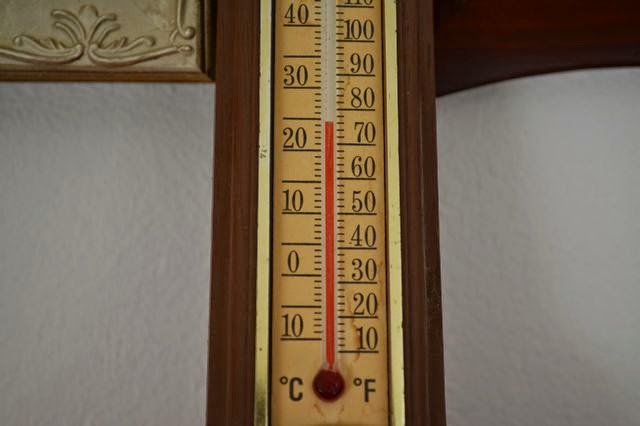
Thermostat Setting at 70°F
Every morning, my husband lets our dogs outside to do their business. Dogs haven't done that for hours so they are eager to go downstairs. They head to the back door, step outside, finish what they need to do. The dogs immediately come back inside, climb up the stairs, hurry into their cages, snuggle with fluffy doggy blankets and feeling relieved. Sounds like they wanted to tell us it shouldn't be so cold outside.

Sometimes dogs forget how cold it is out there. Sunlight streaming through the windows is so inviting. They want to feel warmth, beg us to open the door, and then they remember that it is still winter. They continue to do in and out until actual spring comes. It's frustrating yet amusing when they turn around at the door, not even taking one full step out. It looks like an invisible wall of cold air exists in front of their noses.

Living Room Temperature is 76°F
This is the second winter since we applied Gaina. After the first year we already had satisfactory results, our energy bills went down and air quality improved, making it soft and clean. This year my husband noted, "It's warmer than before."

You may ask, "How much was saved on energy bills?" or "What scientific evidence is there?" The information involves so many different factors, such as house size, where it is applied, how many applications or coats are used, difference of temperature and electric bill etc. It's a lot.

So, I wanted to simply say,  "We love it!"

"How about the dogs?" you may wonder, "Do they like Gaina too?" Our dogs like to lay on the sun heated tile floor. However, this year it's different. They lay in cool shaded areas. So it seems their usual places (the couch or their doggy beds) make them too warm. From time to time they need to cool down. Another bonus, they've stopped going in and out. The sunlight isn't as attractive to them, so it doesn't spoof them anymore. What this means is that they are warm and comfy just like my husband said. That is very good!

Meanwhile, the dogs' duty to protect our territory still continues. Their keen barking breaks my peaceful comfortable afternoon, forcing me to open the back door. They run out to check the perimeter, do a little barking, satisfy their obligation, then demand me to open the door again. Because, for the dogs, there is nothing more to do outside in cold weather. I'd like to say that they are still funny little dogs.

"It's cold! Let me in"

Saturday, November 22, 2014

12. Cats know warm place

Cats love being warm, cuddling up to something nice like a blanket or perching on windowsills to enjoy the afternoon sun. It is touching to find them in comfortable warm places.

Our summer in the Oceanic climate of the Pacific Northwest is ending, the days are getting shorter and colder, cat's coat thickens during the autumn season. They're soft, fluffy and now have dense thermal insulation from the fur growth. After the summer fur falls out, it is then replaced with winter fur. When the fur reaches optimum density (telogen phase) it goes through a slow growth period. Since shedding is significantly decreased during this phase, the new winter coat plays the role of natural warm-suit for protecting their bodies from the cold temperatures. When spring comes, they shed the winter coat.

One autumn day, I found one of my long haired cats got so thin. He didn't really lost weight, just lost all his long summer hair. Still, his growing winter coat was much shorter. Since he is an indoor cat, he doesn't mind short or long fur. He finds warm places to stay, as winter goes on, his fur does get longer and thicker. Cats are expert at finding cool or warm places, whichever fits their needs at the time. I see their interesting behavior in my house all year long.

When my husband and I moved into our home, 6 cats came along with us. One outdoor cat, three indoor cats, and two adopted old cats, like grumpy grandmas. Soon they understood the rules, having to deal with each other. At that time, coyotes often showed up behind our new house. So our cats weren't aloud to go outside.

Inside there is enough space for each of them to play, go to different rooms, upstairs and downstairs. They chose a favorite room, my husband's library, "A Library with a View". The room is on the northwest corner of the house. There are two windows in this upstairs hideaway. The cats gaze at the sky, clouds, hill, trees, houses, roads and moving things like people, animal or cars. Ah, if only they could understand how gorgeous the sunset is.

My husband has tons of books. The library walls are covered with bookshelf, and books are piled everywhere. There is a large guest room next to it also. Years later, we switched the library and guest room, because the growing number of books began invading other rooms. Bookshelves were moved in to the larger room. And cats moved also.

New library has only one window. Still they can see outside, but its not much to see. Do they want to read books rather than watching outside? Nay. They just follow their own habits, warmth. Yes, bookshelves function as insulation making the room warm. Sadly, I must admit, "A Room with a View" was not their first priority.

But wasn't existing insulation good enough? Our house was new when we purchased it in 2002. Since the result shows how cold the room became after the bookshelves were taken away and the next room got warmer because of it. Adding insulation is essential to every house.

After we applied Gaina Insulation Coating, the cats behavior changed again. Now they are back staying in the northwest corner guest room. I believe it is because the room has become comfortably warm since the application of Gaina. Cats know where the warm places are. Well, that is what they taught me about insulation anyway.

Friday, September 26, 2014

10. Warmness from the tile floor

Many people love tile floor. It's beautiful, durable and easy to clean. However some hate it. Because tile surface is hard, cold, and slippery.


When my husband and I decided to put tile throughout the entire first floor open combined living room and kitchen, one of my friends said "It's going to be cold in winter." Although, the tile installer told us that "Tile floors are warmer than wood floors". He didn't explain the reason why. Later I though about what he meant and wanted to know why.

It was autumn and the tile installation was finished. Our tile floors were so beautiful and we loved it! Especially my husband, because of its durability and ease of cleaning. We didn't notice much cold in following winter. Rather, I felt the mysterious change of warmness.

Our house upstairs had been slightly warmer than downstairs. Warm air moved up through the stairwell to second floor, since the thermostat is on the first floor. After the tile installation was finished, I would come half way down each morning, and feel a sudden soft warmness touch my skin. "Is that the warm air?" I thought. I felt like the warm air stayed on the first floor. Then I thought, "It can't be", I was in denial. Warm air moves up, and stays there, right? According to my friend, tile floor downstairs is supposed to be cooler.

Tile floors are well known for feeling cool on bare feet. Its cooler than wooden floors at the same room temperature. Tile moves heat faster than wood and is a good heat conductor, tile floor takes heat rapidly from skin. Wood is more of an insulator and tile is more of a radiator. Of course wood takes heat away from skin, but the difference felt has to do with speed. Carpeting is a better heat insulator than wood. It impedes the flow of heat and feels comparatively warm to bare feet. That is the reason why tile floors feel cold. On the opposite side, since it transfers well, it makes an excellent choice for in-floor radiant heat systems of one type or another.

The mysterious warmness that I felt wasn't from the air movement and had nothing to do with touching the floor. Then I thought about fires. I love bonfires. And watching the dancing flames in my fireplace makes me relaxed and warm, especially in cold conditions. The heat comes out from the flames, and not from circulating air. It's radiant heat. So I concluded that the mysterious warmness must be radiating from the tile floors, but we had no heat piping system, so where did the hear actually come from?

As I said, we have tile floor in down stairs and wood floor in up stairs. Our down stairs was warmer in winter, because of the radiant heat from tile floor. Our dogs love heated tile by sunlight. Over night, tile floor release accumulated heat absorbed by the suns infrared eneregy. That's why I felt warmness first thing in the morning.

However, the phenomenon changed and got better after Gaina was coated inside. Gaina contains ceramic beads as the insulator and adjusts to surrounding temperature. Even if you touch it, it doesn't feel cold like tile. So through out our house, we have same comfortable temperature.

Tuesday, September 2, 2014

9. Radiant insulation and accumulated heat

When searching for a dream house, it's good to remember that there is no perfect one. My husband and I didn't get everything we wanted. One concern was the west side of the house faces an open space. Sure we have a nice view of the sky and roofs. But during the summer, sunlight hits the west facing windows and my tiny office gets really hot, becoming nothing but a storage room.

We are living over the 45th parallel north. At this northerly latitude the shortest winter daylight is less than 9 hours, longest summer daylight is close to 16 hours. So my office gets long hours of direct sunlight in the summer.

Generally strong sunlight was coming through the windows heating the curtains and blinds. This became another heat source inside the room. Also the floor and walls were able to hoard heat throughout the day, elevating the room temperature to an unbearable level. I thought it would be better to entirely cover each window from the outside. One important point for cooling the room and saving energy is sunlight doesn't hit curtains, blinds, floor or walls. Which means that my office would be dark during the day making it difficult work in.

When my husband and I were thinking about how to block and unblock sunlight, one of our friends introduced us to Roll Shutters. These fit our needs exactly. At that time I didn't have much insulation knowledge, even though I was thinking about ideas for controlling the temperature without using air conditioning. We put Aluminum Shutters outside my office windows and Solar Shades on our south facing living room windows. When they are rolled down, to my amazement, immediately the inside cools down.

My office is cooler, but dark during the hottest times of summer. Even so it is much more comfortable. Then I thought about the outside of our house. If sunlight makes that much heat, what's going on with the roof and walls outside?

Roof Temperature Difference
Aluminum reflects 97% of solar heat. There are different types of roofs that reflect less than aluminum. Since Radiant barriers don't reflect 100%, the sunlight that isn't reflected penetrates the roof and outside walls and heats up the interior living space. Some may think insulation is supposed to prevent heat. But, insulation stores most of the heat, and releases it little by little. Heat moves from higher to colder temperatures. When the sun goes down and the outside air cools, insulation continuously releases absorbed heat into the room. Insulation is like a sweater. So the house is wearing winter clothes all year round. Winter heat moves the opposite direction, escaping to the outside.

Summer heat causes a huge load on air conditioning, costing more money and energy for cooling heated walls and ceilings. One solution is adding thicker insulation. It would slow down the conduction of heat, and pay for itself after many years. There are different types of insulation materials ranging in price, and better to look for a heat barrier with it.

We chose Gaina because it is a thin material, easy for us to apply. We used it inside on the walls and ceilings. Gaina can also be applied on the exterior of the house as a radiant reflection barrier. So in the future, we would like to put Gaina on the outside of our house since the interior application is working so great.

Now I have my office room back in summer. And enjoying beautiful summer sunsets, without using air conditioning.

Wednesday, August 27, 2014

8. Sunlight reflection

I love summers in the Pacific Northwest. We have cool, dry summers-subtropical like the Mediterranean. As Northwest summer approaches, no more gloomy wet weather, the sunny days and blue-sky increases. And the bellies of my Yorkshire Terriers get tan. Yes, belly not back. It sounds odd. But reflected sunlight from concrete roads (park trails) makes their belly tan. Their bellies are shaved, and close to the road surface.

Solar radiation heats our earth. Half of the sunlight reflects directly back to space or is absorbed into the atmosphere. The other half reaches the surface. Some of the surface heat energy also goes back out to space, balancing temperature and supporting life. Cities have higher temperatures from buildings and paved roads. This is known as the urban heat island.

Soil temperature is not raised much by the sun, and the shade from trees is almost the same as the air temperature. In contrast, concrete road temperatures can reach 120 °F (asphalt is even higher). The temperature rises rapidly when the sun hits a road surface, then drops very slowly after sundown. And 25% of UV radiation reflects from concrete, and maximum exposure is between 10 am - 4 pm. (Sun Safety) So, it is recommended to take our dogs for walks during other times of day to avoid these conditions.

The solution of global warming or an urban heat island could be to reflect the incoming sunlight back to space. There was an idea about painting roofs white and paved roads light-color. However I haven't seen many white roofs around my area, it may not be a popular thing to do. Although, if a white painted roof could save the world, we may have some work to do.

There are many products that reflect sunlight which lowers roof surface temperature. One of these products is Gaina. It reflects solar radiation by 90% and reflects infrared by 95% of observed heat, combined with other thermal insulating abilities, this makes Gaina an excellent option. We want to reduce electric bills as well as help reduce global warming. Much like a space suit. It shields radiation as well as insulates to keep the inside comfortable against hot and cold harsh conditions. The principle of universality has no magic solution to work alone. Likewise, Gaina has a variety of effects to save energy and money.

Well, summer ends, cloudy days come back. My small dogs' belly-tans fade. I also have a big dog, a Golden Retriever. Her belly doesn't seem to get as tan. Maybe her belly hair works as sun block. Anyway, I don't mind the gloomy weather season. Clouds seem to work as thermal insulation like blankets to prevent heat loss. So we don't have many freezing days. The dogs can enjoy walking year-round. Every year, when my doggy's belly turns back to its original pinkish white soft color, I know it's the coming of autumn.