Sunday, July 19, 2015

20. Atmosphere of The Green Trees Tunnel

One early summer day, I was driving to a tiny water front town. My car passed through the city, went across the open sunny space on the outskirt of that town, and before I reached the boundary of the next town, I had to pass through a green tunnel of trees. When I entered it, suddenly I was wrapped with a nice cool pleasant feeling. There are many urban tree canopies and tree tunnels, but this particular tunnel had a special impact on me. Since then, I have been thinking about tree shade that stays comfortably cool during the hot summer.


A Pass Surrounded by Trees
Tree shade coolness wouldn't be obtained in the shade of the building. It is nature's air-conditioning. Trees pump water up from their roots, the temperature of leaf surfaces decrease, evaporating moisture from the leaves remove heat energy from the surrounding air. Transpiration is an important role for trees. This process maintains a constant temperature to prevent damage from high temperatures and keep us comfortable and healthy. Moisture from the soil where the tree stands help too. On a hot day, tree shade "fell like" temperature will be lower than asphalt and concrete areas, possibly by more than 27˚F (15˚C)

The "feel like" temperature is how we sense our perceptions that depend on humidity or wind and
differ from weather or room temperature. We may feel cool or warm at the same temperature. It's iffy, and there have been a lot of calculating formulas with claims and ideas. So to gain the benefits from tree shade, the most effective way is to study and get a better understanding of where to plant trees.

Some might say "Staying in an A/C room is enough". Of course air-conditioning makes us feel cool and creates a healthy environment. However, global warming is worsening. Could we help by gaining a better understanding nature? By using A/C effectively and efficiently we are reducing energy use?

When I went into the green tree tunnel, not only did the temperature drop down, the atmosphere had also changed dramatically. A natural phenomenon occurred from the evaporation of moisture from tree leaves and the ground, wind, the terrain and so forth bringing positive and negative ions into balance. The type of air was different from any machine made comfort.

And now, I have a similar experience in my house. After GAINA was applied in my house, the air quality has changed. Customers of GAINA commented on experiencing similar things after using GAINA, "Cool in summer" and "Air quality softened" are the common theme. This product originated from observing nature, and a keen desire to help the global environment by reducing personal and commercial energy use.


Since we are part of nature, respecting it will help to improve our lives. I appreciate the nice learning experience from the green tree tunnel. Embracing the understanding of how living close to trees is so important for health and comfort, I'm now enjoying a comfortable atmosphere inside and outside during the hot summer's day.

Thursday, June 25, 2015

19. Forest Air

Tree Canopy Shade
Forest air is refreshing and makes us feel good. While surrounded by trees, taking a deep breath when walking is so relaxing.

When I was a child, I went to the forest a lot. My father was an owner of a small family forest, handed down for several generations. We lived in an urban area, in Southern Japan. Every weekend, my father and uncle got together and went to grandmother's country home, and took care of the family property. 

Forests have to be managed well to keep them healthy. Breeze needs to pass through. Unnecessary undergrowth, bushes and branches cause harm to the forest so it had to be removed. It was hard work, especially in summer. Weather was very hot and humid, it was like South East Asia.


I helped my father work. I cleaned undergrowth and carried baby trees to plant. When I got tired, I took off and followed animal trails. Everybody was busy so they didn't notice where I went. I learned about the forest and how everything was inter-dependent 
by observing nature.


View from my house
Many years have passed. Now I'm living in the Pacific Northwest. And I enjoy having woods behind my house. Trees help clean air, control temperature, and manage storm water. If we properly maintain urban forests and enhance their health, the green infrastructure benefits our community.

I enjoy walking for hours in the forest, however not so much at the Mall or in the downtown area. Of course, I like to go shopping. But, if I don't rest frequently, I get a splitting headache, even though I'm not prone to headaches. Nature must have something that empowers me.

This may be one of the most fascinating aspects of GAINA. For example, the ion measurement within a GAINA coated room has the same ion distribution of mountainous areas at over 3200 ft above sea level. Special ceramic beads in GAINA are what improves air quality, by balancing positive and negative Ions. Negative and positive Ion balance is important. Now, I have that forest air right out my back door and balanced ions inside with GAINA coating.

From time to time, I think about my father's forest. When he was planting baby trees, he said to me,  "I plant, you take care, and your children will cut these trees". Owners of forests attached to family land, took great pride and were committed to their trees. However, grandmother, father and uncle have past away, and the forest was left alone without a caretaker. Cheaper imported lumber caused the decline of forestry. Many family forest owners can no longer survive. They don't have enough financing to continue as competitive forest-land holders.


National Park Forest
It's sad but I'm not disheartened by the forest situation. In time, I believe the forest will recover sooner or later, especially with help from caring people. Trees take years to grow, and the forest is resilient. I just need to be patient.

When I go into the forest, the trees, the colors and the smell of the air invigorate me. I had wonderful times when I was a child and even now my love of nature brings me great joy.

Saturday, May 16, 2015

18. Experience from coating GAINA

Every time I go into our house guest room, I feel very at ease. This coming September will be the second year since we coated GAINA, the insulation made of ceramic beads. In our house, we painted select rooms and ceiling areas, leaving some rooms as they were before to compare.

We are not the first to use GAINA coating. Some US businesses visited Nisshin Sangyo already, the company as best selling Eco Paint in Japan.

Originally, the ceramic insulation developed by NASA. Because of the effectiveness, ceramic insulation widely used and has been commercially available in the world. JAXA (Japan Aerospace Exploration Agency) was inspired to use their space technology to develop their own version. Duplication required expertise and strict safety measures. New Enterprise Promotion Department shared their ceramic beads insulation data with several interested developers.

Many Japanese leading paint companies failed at duplicating a usable ceramic coating, because the technology was far too advanced. That is why JAXA was supplied about Nisshin Sangyo. The small company reached a considerable level already. Now, GAINA is part of the JAXA COSMODE PROJECT. Scientists are continually finding more data in regards to its health benefits. That could be the reason I feel refreshed whenever I go into the guest room.

Right now, a long-term guest lives in our house. She has several health problems including allergies to cats and dogs. We have 4 cats and 5 dogs (at first 6 dogs). In the beginning, we thought for her to stay here would be impossible. However, she actually doesn't seem to mind. Time to time, cats and dogs visit her room, and make her smile. It wouldn't be possible without GAINA filtering the air of allergens.

My previous article mentioned that after we painted, we immediately felt different, and more peaceful. However, after our long-term guest came, the effect became more obvious.

For her privacy, the North Side guest room door was closed most of time. There were two windows. During summer time it was nice and cool, however in winter time it wasn't warm enough, because of heat loss through windows. Till we can upgrade the windows, we put in a portable far-infrared heater. In minutes it quickly warmed the whole room up and made it comfortable, and GAINA retained the heat effectively, She did wear summer dresses the entire winter.

Nisshin Sangyo took a long time to become the best seller of this product. At first, the public didn't understand about ceramic beads insulation. In time, word of mouth spread of its effectiveness. It is now the #1 paint in Japan. That is significant proof of its effectiveness. Right now, the main selling product for the company is the outside coating. However, they say the inside coating has better effects. Therefore, their business will continue to grow. We coated GAINA inside our house to have our own experience to make sure.

There is a lot of information out there about other ceramic coating insulations. GAINA is superior in its effectiveness since it originally came from NASA. However, each ceramic insulation products have different levels of effectiveness. The manufacturers can provide scientific information. However, I'm interested in actual experience. Does it save our money? Does it make our life comfortable? And I say "Yes, GAINA does". So I recommend it wholeheartedly to anybody who is interested in saving money and wants to feel nice living at home.

Thursday, April 30, 2015

17. Polystyrene foam Insulation made me to think

Everybody wants to live comfortably! Cool in Summer and warm in winter. To achieve this, I thought for a long time, it was a necessity to have a Heat Pump or HAVC system. Of course, I had heard about insulation. However, I didn't think much of it due to a lack of knowledge. One day, that all changed when I saw SIP (Structural Insulated Panel) homes.

At a  building site of these houses, the contractors showed me a panel of polystyrene foam sandwiched between the interior and exterior of the entire structure, in floors, roofs and walls. They explained that the 2500 sq ft home  would have a monthly average electric heating bill of approximately $30 (rate at that time and some variation by region). I was amazed at how much insulation could effect our lives.

Although I'm not living in a SIP home right now, there was a time when my husband and I considered that option while searching for a new home. We didn't capitalize on our newly acquired knowledge because we didn't have enough time for future construction. We needed to move out of our previous house immediately. After first securing our financing, we were forced to find a home that was already completed. Soon we found it. Not even one month later, we were all moved in.

A View from My Kitchen Window in Spring
Anyway, we like our home, especially the location. It's close to parks and protected green-space. However, as time goes by, we noticed our heating bills were very expensive during the winter months.

At that time my interest in reducing Global warming and Energy conservation were also growing. Both issues are now generally accepted public concerns. Expensive heating bills and environmental issues led me to think of ideas about adding insulation in my house. But, how?

Still, I had little knowledge. How about Straw-bale construction. It would be wonderful. Or, maybe not, here in the soggy Northwest. When I learned that some cities banned polystyrene foam cups and food containers I was relieved that we didn't purchase a SIP home. EPS (expanded polystyrene) are very common in our lives. I thought about polystyrene insulation. Polystyrene foam has been widely used as a building material also.

There is a concern of Styrofoam damaging our environment and spreading to the rest of the world. Being unwelcome in many communities, some businesses have moved to reduce or switch to other products. It may not be easy for some businesses. However, society and the global manufacturing industry are always advancing. Embracing new ideas and technology to create better, healthier, and safer products.

When a new idea comes, we are likely to get confused. However confusion is not so bad, rather it makes us think and encourages us to improve. Yes it is true that we are naturally curious creatures. So I continuously search for ways to make our living more comfortable while being environmentally safe. I may not find a perfect solution, but I will find satisfaction in a better life.

Monday, March 23, 2015

16. Fireplace Popularity

The fireplace is not so popular in our house anymore. Of course, it is March. Spring's here and it's getting warmer. Who wants to stay by the fireplace? Well, I'm not talking about spring. This happened during the last winter.

Nobody at Fireplace
(pet-mat has enough space from fireplace for air)
In my previous article, it was talking about warmth on cold days. I know its better to show data. But when my husband and I coated GAINA in September of 2013, we didn't prepare well. So, we don't have exact numbers. We feel the results are amazing, so we went to the ones most likely to know GAINA's data. (in the future, it will come)

Meanwhile, I noted some comments, rather I should say, observations. They are our pets. You may think "What!?" Basically, animals are not persuaded by advertising, it's not possible to tamper with the outcome of their data either, simply, reacting according in the situation. They are just being honest.

Gathered together before coating GAINA. 
Anyway, our pets (cats & dogs) love laying in front of our fireplace, during the cold winter. Sometimes, they demanded me to turn on gas fireplace, staying there for long periods of time. The heat seems to entice them. Ah, when I touch their warm body and fur, even the smell warms my heart.

Yes, I know, we are spoiling them. Of course, we have to be careful for their safety, such as ventilation to get fresh air and not to get them burned.

The second winter has past since we coated GAINA. The manufacturer mentioned that as time passed, we would keep getting better results because of curing. And it was true. The effectiveness is better than the first year. Our pets proved it.

Panting... Too hot!?
For example, our golden retriever who has hip-dysplasia and arthritis, used to lay in front of the fireplace a lot. Nowadays however, she immediately start panting and moves away quickly. She now likes to lay at the cool entrance rather than at the fireplace even through the winter months.

She hates sitting on cold ground because of her hip condition. When she went to dog training class, her hips gave her trouble. Obeying the "Down" command on cold ground for extended lengths of time, was too much for her tender hind quarters. She couldn't walk well after a few days in class. Now, even though she enjoys training, she refuses the "Down" command when on cold ground.

Nice & comfortable in Winter
It's not only her, the little doggies won't stay near the fireplace either. When I turn it on they disappear immediately. So that's how our fireplace lost popularity. They still love the heat from the fireplace, just for short times now.

I love our fireplace. Both its warmth and watching the swaying and dancing of the flames are so soothing. However, I think wood stoves are the best for heat. Pellet stoves and gas fireplaces are both great. If I had enough space, I would like to have both of them. There are also eco-fireplaces that are nice to have. No matter what, many are drawn to fireplaces in cold winter days.

Well, since our pets stopped demanding us to turn on the gas fireplace, we have lower energy bills to pay while having plenty of warmth inside. These are my observations on the long-term effects of applying GAINA in our house. Happy pets~Happy humans!

Happy Family (watching my husband)
Dedicated to the memory of Tuffy (second from right). He died on March 30th, 2014.

Friday, February 13, 2015

15. Bathroom in Winter

It's February, the end of winter and the shortest month in the year. February has only 28 days (29 days in a leap year). The Ancient Roman calendar begins in March and ends with December, the rest of the winter days were left off, not counted for agriculture. January and February were added later. It seems like February just got the leftovers. Nobody knows exactly why, but we don't mind having a shortest winter month anyway. And this winter, I experienced something interesting from the bathrooms.

guest bathroom

This is the second winter in the house coated with ceramic insulation. Ceramic Insulation Coating controls heat flow to keep cool in summer and warm in winter. There are several products, and we chose GAINA.

We have a nice warm house in winter now, and the bathrooms are the warmest place in our house, Our bathrooms don't have any windows. Since windows are one of the main reasons for heat loss, it's natural to think the place without windows should have less temperature change. But...GAINA made a big difference.

The walls and ceiling of the bathrooms were coated, they stay at a comfortable temperature and have nice soft air. A lot of people start and end everyday in the bathroom. Many would love to have a good quality bathroom. So, how about the bathroom with a window in an existing building. Does GAINA work there also?

guest room
Well, our guest room at the north-side of the house has two windows. In this room, I noticed that the air is soft and clean, but felt a little bit cooler. Ceramic Insulation Coating is not a heater. To warm up, the room needs a heat source.

For example, there are two rooms, exactly the same, but one room was coated with Gaina and the other with regular paint. After both doors are closed, both rooms lose heat from windows and the temperature drops. The difference is, the GAINA coated room loses heat slower than the other room, and when the heater turns on, the temperature immediately rises. That's what leads to energy conservation and saving money. How much lost or gained temperature depends on the houses and buildings. Climate doesn't seem to matter. I think this product has a lot of potential and value.

Right now there are no international standards to represent GAINA, authority's are working to establish those standards. Some may have differing opinions of ceramic insulation coating. Eventually the truth will come out.

Ancient Roman people were less active in the winter months. For centuries people survived cold winters by saving food and staying indoors. This seems like hibernation to me. Now-a-days we stay very active during the cold months because we have better heating available. Sadly however, we waste a lot of energy. We need to find a global solution for conserving energy and preventing further global warming. GAINA is designed to be part of the solution, not the problem.

Friday, January 16, 2015

14. Adding Insulation Materials

Adding insulation is very effective for saving energy. It keeps the inside of the house warm or cool while spending less on energy bills. Some of my friends installed thermal insulation material on their walls and ceiling and got good results. However, I thought, "It's for old houses, not for my house."

My husband and I purchased a newly built house with insulation already installed. I thought today's insulation performance of new houses was up to date in the market. So insulation wasn't on my mind. I was rather interested in a better price. How many people would care for insulation performance when purchase a newly house anyway?

Home builders and developers have to contend with building costs in the sales market. The house must have the appropriate price for what consumers want. Most builders and building suppliers put forth a lot of effort to find feasible construction costs, while adhering to building codes. These are the minimum standards for the site, equipment, and structure. Application of these building codes protect peoples lives, health and property.

Naturally, builders commonly use popular insulating materials that are inexpensive and easily installed. The construction permit assures some insulation, not necessarily the best performing material. Unfortunately, some builders may not have accurate knowledge about the products they choose and assume that it is good enough to just install any type of insulation that meets minimum requirements, which may lead to inadequate performance and sloppy work.

In any case, it's good to remember that meeting the minimum requirements of building codes does not fully guarantee quality. To obtain a higher level of energy efficiency, it is preferable to prepare the interior walls and ceiling prior to building completion. It would be nice to have the option of different types of insulation materials before purchasing a house. How much more initial cost would there be compared to the long-term saving on future energy bills?  After all, we have to pay both the mortgage and energy bills every month. However, providing such comparisons involves so much work, this doesn't happen. Our goal here at Gaina is to provide as much information as possible to ignite customer interest about the performance levels of different types of insulating products and show the savings of both money and energy in the long run.

I remember when my parents built their house 40 years ago. My father owned a lumber company and my mother had experience working in a construction office. So quality and performance of the building materials used was important to both of them. Yes they spent extra money, but they really enjoyed the superior quality of their home. After my father died, the house was sold and renovated. I was very happy to hear the carpenter's comment, "The house quality is still high, the lumber used in the construction of this house is hard to get now". I wish I could tell this to my father.

paint with brush
Several years passed since my husband and I moved into our new house. I wanted to find something for energy saving. Like I said, I didn't think much about insulation at first. That changed when I found Gaina. The presentation of this product amazed me and immediately decided that I wanted Gaina in my house.

At that time, we couldn't buy Gaina here in the United States. Since no other product compares in quality or performance, I didn't mind the little bit of trouble importing it. It is not cheap, but not too expensive either. Installation is not difficult. With Gaina applied, this winter we are enjoying warmth, clean air and saving money. That means we have acheived comfortable living.

Wednesday, December 24, 2014

13. Spoofed dogs

Winter has come in the Pacific Northwest. Daylight is only 8.5 hours. Sunrise is at 8 AM. Sunset is at 4:30 PM. If we don't wake up early enough, we might miss daylight and live like a mole.
Frozen Wetland
Afternoon Temperature is 34°F
We have wet, cool and moderate winters. Occasionally, there are nice sunny blue skies, usually when it's going to be a freezing day. Because of radiative cooling, even the iced puddle in our backyard won't melt. Therefore freezing days continue until the usual cloudy and rainy days come back.

Well, no matter how wet or cold, the furnace makes our home comfortable indoors. Thankfully in this area, most pets live inside.
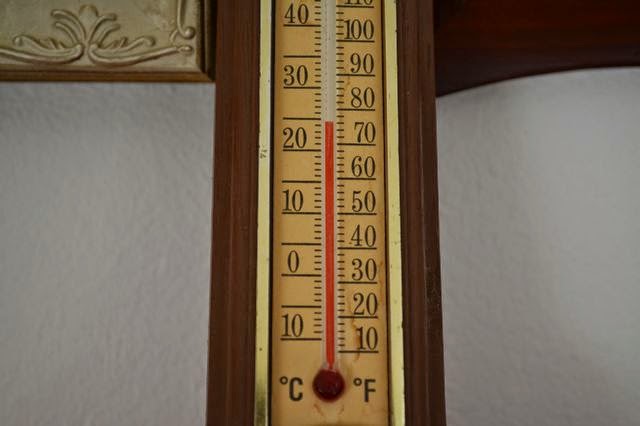
Thermostat Setting at 70°F
Every morning, my husband lets our dogs outside to do their business. Dogs haven't done that for hours so they are eager to go downstairs. They head to the back door, step outside, finish what they need to do. The dogs immediately come back inside, climb up the stairs, hurry into their cages, snuggle with fluffy doggy blankets and feeling relieved. Sounds like they wanted to tell us it shouldn't be so cold outside.

Sometimes dogs forget how cold it is out there. Sunlight streaming through the windows is so inviting. They want to feel warmth, beg us to open the door, and then they remember that it is still winter. They continue to do in and out until actual spring comes. It's frustrating yet amusing when they turn around at the door, not even taking one full step out. It looks like an invisible wall of cold air exists in front of their noses.

Living Room Temperature is 76°F
This is the second winter since we applied Gaina. After the first year we already had satisfactory results, our energy bills went down and air quality improved, making it soft and clean. This year my husband noted, "It's warmer than before."

You may ask, "How much was saved on energy bills?" or "What scientific evidence is there?" The information involves so many different factors, such as house size, where it is applied, how many applications or coats are used, difference of temperature and electric bill etc. It's a lot.

So, I wanted to simply say,  "We love it!"

"How about the dogs?" you may wonder, "Do they like Gaina too?" Our dogs like to lay on the sun heated tile floor. However, this year it's different. They lay in cool shaded areas. So it seems their usual places (the couch or their doggy beds) make them too warm. From time to time they need to cool down. Another bonus, they've stopped going in and out. The sunlight isn't as attractive to them, so it doesn't spoof them anymore. What this means is that they are warm and comfy just like my husband said. That is very good!

Meanwhile, the dogs' duty to protect our territory still continues. Their keen barking breaks my peaceful comfortable afternoon, forcing me to open the back door. They run out to check the perimeter, do a little barking, satisfy their obligation, then demand me to open the door again. Because, for the dogs, there is nothing more to do outside in cold weather. I'd like to say that they are still funny little dogs.

"It's cold! Let me in"

Saturday, November 22, 2014

12. Cats know warm place

Cats love being warm, cuddling up to something nice like a blanket or perching on windowsills to enjoy the afternoon sun. It is touching to find them in comfortable warm places.

Our summer in the Oceanic climate of the Pacific Northwest is ending, the days are getting shorter and colder, cat's coat thickens during the autumn season. They're soft, fluffy and now have dense thermal insulation from the fur growth. After the summer fur falls out, it is then replaced with winter fur. When the fur reaches optimum density (telogen phase) it goes through a slow growth period. Since shedding is significantly decreased during this phase, the new winter coat plays the role of natural warm-suit for protecting their bodies from the cold temperatures. When spring comes, they shed the winter coat.

One autumn day, I found one of my long haired cats got so thin. He didn't really lost weight, just lost all his long summer hair. Still, his growing winter coat was much shorter. Since he is an indoor cat, he doesn't mind short or long fur. He finds warm places to stay, as winter goes on, his fur does get longer and thicker. Cats are expert at finding cool or warm places, whichever fits their needs at the time. I see their interesting behavior in my house all year long.

When my husband and I moved into our home, 6 cats came along with us. One outdoor cat, three indoor cats, and two adopted old cats, like grumpy grandmas. Soon they understood the rules, having to deal with each other. At that time, coyotes often showed up behind our new house. So our cats weren't aloud to go outside.

Inside there is enough space for each of them to play, go to different rooms, upstairs and downstairs. They chose a favorite room, my husband's library, "A Library with a View". The room is on the northwest corner of the house. There are two windows in this upstairs hideaway. The cats gaze at the sky, clouds, hill, trees, houses, roads and moving things like people, animal or cars. Ah, if only they could understand how gorgeous the sunset is.

My husband has tons of books. The library walls are covered with bookshelf, and books are piled everywhere. There is a large guest room next to it also. Years later, we switched the library and guest room, because the growing number of books began invading other rooms. Bookshelves were moved in to the larger room. And cats moved also.

New library has only one window. Still they can see outside, but its not much to see. Do they want to read books rather than watching outside? Nay. They just follow their own habits, warmth. Yes, bookshelves function as insulation making the room warm. Sadly, I must admit, "A Room with a View" was not their first priority.

But wasn't existing insulation good enough? Our house was new when we purchased it in 2002. Since the result shows how cold the room became after the bookshelves were taken away and the next room got warmer because of it. Adding insulation is essential to every house.

After we applied Gaina Insulation Coating, the cats behavior changed again. Now they are back staying in the northwest corner guest room. I believe it is because the room has become comfortably warm since the application of Gaina. Cats know where the warm places are. Well, that is what they taught me about insulation anyway.

Friday, September 26, 2014

10. Warmness from the tile floor

Many people love tile floor. It's beautiful, durable and easy to clean. However some hate it. Because tile surface is hard, cold, and slippery.


When my husband and I decided to put tile throughout the entire first floor open combined living room and kitchen, one of my friends said "It's going to be cold in winter." Although, the tile installer told us that "Tile floors are warmer than wood floors". He didn't explain the reason why. Later I though about what he meant and wanted to know why.

It was autumn and the tile installation was finished. Our tile floors were so beautiful and we loved it! Especially my husband, because of its durability and ease of cleaning. We didn't notice much cold in following winter. Rather, I felt the mysterious change of warmness.

Our house upstairs had been slightly warmer than downstairs. Warm air moved up through the stairwell to second floor, since the thermostat is on the first floor. After the tile installation was finished, I would come half way down each morning, and feel a sudden soft warmness touch my skin. "Is that the warm air?" I thought. I felt like the warm air stayed on the first floor. Then I thought, "It can't be", I was in denial. Warm air moves up, and stays there, right? According to my friend, tile floor downstairs is supposed to be cooler.

Tile floors are well known for feeling cool on bare feet. Its cooler than wooden floors at the same room temperature. Tile moves heat faster than wood and is a good heat conductor, tile floor takes heat rapidly from skin. Wood is more of an insulator and tile is more of a radiator. Of course wood takes heat away from skin, but the difference felt has to do with speed. Carpeting is a better heat insulator than wood. It impedes the flow of heat and feels comparatively warm to bare feet. That is the reason why tile floors feel cold. On the opposite side, since it transfers well, it makes an excellent choice for in-floor radiant heat systems of one type or another.

The mysterious warmness that I felt wasn't from the air movement and had nothing to do with touching the floor. Then I thought about fires. I love bonfires. And watching the dancing flames in my fireplace makes me relaxed and warm, especially in cold conditions. The heat comes out from the flames, and not from circulating air. It's radiant heat. So I concluded that the mysterious warmness must be radiating from the tile floors, but we had no heat piping system, so where did the hear actually come from?

As I said, we have tile floor in down stairs and wood floor in up stairs. Our down stairs was warmer in winter, because of the radiant heat from tile floor. Our dogs love heated tile by sunlight. Over night, tile floor release accumulated heat absorbed by the suns infrared eneregy. That's why I felt warmness first thing in the morning.

However, the phenomenon changed and got better after Gaina was coated inside. Gaina contains ceramic beads as the insulator and adjusts to surrounding temperature. Even if you touch it, it doesn't feel cold like tile. So through out our house, we have same comfortable temperature.

Tuesday, September 2, 2014

9. Radiant insulation and accumulated heat

When searching for a dream house, it's good to remember that there is no perfect one. My husband and I didn't get everything we wanted. One concern was the west side of the house faces an open space. Sure we have a nice view of the sky and roofs. But during the summer, sunlight hits the west facing windows and my tiny office gets really hot, becoming nothing but a storage room.

We are living over the 45th parallel north. At this northerly latitude the shortest winter daylight is less than 9 hours, longest summer daylight is close to 16 hours. So my office gets long hours of direct sunlight in the summer.

Generally strong sunlight was coming through the windows heating the curtains and blinds. This became another heat source inside the room. Also the floor and walls were able to hoard heat throughout the day, elevating the room temperature to an unbearable level. I thought it would be better to entirely cover each window from the outside. One important point for cooling the room and saving energy is sunlight doesn't hit curtains, blinds, floor or walls. Which means that my office would be dark during the day making it difficult work in.

When my husband and I were thinking about how to block and unblock sunlight, one of our friends introduced us to Roll Shutters. These fit our needs exactly. At that time I didn't have much insulation knowledge, even though I was thinking about ideas for controlling the temperature without using air conditioning. We put Aluminum Shutters outside my office windows and Solar Shades on our south facing living room windows. When they are rolled down, to my amazement, immediately the inside cools down.

My office is cooler, but dark during the hottest times of summer. Even so it is much more comfortable. Then I thought about the outside of our house. If sunlight makes that much heat, what's going on with the roof and walls outside?

Roof Temperature Difference
Aluminum reflects 97% of solar heat. There are different types of roofs that reflect less than aluminum. Since Radiant barriers don't reflect 100%, the sunlight that isn't reflected penetrates the roof and outside walls and heats up the interior living space. Some may think insulation is supposed to prevent heat. But, insulation stores most of the heat, and releases it little by little. Heat moves from higher to colder temperatures. When the sun goes down and the outside air cools, insulation continuously releases absorbed heat into the room. Insulation is like a sweater. So the house is wearing winter clothes all year round. Winter heat moves the opposite direction, escaping to the outside.

Summer heat causes a huge load on air conditioning, costing more money and energy for cooling heated walls and ceilings. One solution is adding thicker insulation. It would slow down the conduction of heat, and pay for itself after many years. There are different types of insulation materials ranging in price, and better to look for a heat barrier with it.

We chose Gaina because it is a thin material, easy for us to apply. We used it inside on the walls and ceilings. Gaina can also be applied on the exterior of the house as a radiant reflection barrier. So in the future, we would like to put Gaina on the outside of our house since the interior application is working so great.

Now I have my office room back in summer. And enjoying beautiful summer sunsets, without using air conditioning.

Wednesday, August 27, 2014

8. Sunlight reflection

I love summers in the Pacific Northwest. We have cool, dry summers-subtropical like the Mediterranean. As Northwest summer approaches, no more gloomy wet weather, the sunny days and blue-sky increases. And the bellies of my Yorkshire Terriers get tan. Yes, belly not back. It sounds odd. But reflected sunlight from concrete roads (park trails) makes their belly tan. Their bellies are shaved, and close to the road surface.

Solar radiation heats our earth. Half of the sunlight reflects directly back to space or is absorbed into the atmosphere. The other half reaches the surface. Some of the surface heat energy also goes back out to space, balancing temperature and supporting life. Cities have higher temperatures from buildings and paved roads. This is known as the urban heat island.

Soil temperature is not raised much by the sun, and the shade from trees is almost the same as the air temperature. In contrast, concrete road temperatures can reach 120 °F (asphalt is even higher). The temperature rises rapidly when the sun hits a road surface, then drops very slowly after sundown. And 25% of UV radiation reflects from concrete, and maximum exposure is between 10 am - 4 pm. (Sun Safety) So, it is recommended to take our dogs for walks during other times of day to avoid these conditions.

The solution of global warming or an urban heat island could be to reflect the incoming sunlight back to space. There was an idea about painting roofs white and paved roads light-color. However I haven't seen many white roofs around my area, it may not be a popular thing to do. Although, if a white painted roof could save the world, we may have some work to do.

There are many products that reflect sunlight which lowers roof surface temperature. One of these products is Gaina. It reflects solar radiation by 90% and reflects infrared by 95% of observed heat, combined with other thermal insulating abilities, this makes Gaina an excellent option. We want to reduce electric bills as well as help reduce global warming. Much like a space suit. It shields radiation as well as insulates to keep the inside comfortable against hot and cold harsh conditions. The principle of universality has no magic solution to work alone. Likewise, Gaina has a variety of effects to save energy and money.

Well, summer ends, cloudy days come back. My small dogs' belly-tans fade. I also have a big dog, a Golden Retriever. Her belly doesn't seem to get as tan. Maybe her belly hair works as sun block. Anyway, I don't mind the gloomy weather season. Clouds seem to work as thermal insulation like blankets to prevent heat loss. So we don't have many freezing days. The dogs can enjoy walking year-round. Every year, when my doggy's belly turns back to its original pinkish white soft color, I know it's the coming of autumn.
                                                                                        

Saturday, August 16, 2014

7. Nature and Technology

Nature gives us abundant gifts. We depend on so much, even advanced technology and industry gets inspiration from the natural world. For example, the owl's serrated feather edges are nearly silent for hunting. Inspired by an owl's feather, the technology of a vortex generator to reduce aerodynamic disturbances is utilized in aircraft and bullet train. It is also applied to competitive speed skater's boots and caps(helmets).

However, inspiration doesn't always come easy. It takes a long time to accumulate experience and record observations in nature to design technology. It would be nice for younger generations to start earlier.

With no intention of becoming a scientist, nor inventor, I discovered learning from nature is so much fun and beneficial. When I learned "deciduous" in the sixth grade, I imagined my future home with deciduous trees. In the summer, leaves cover trees and provide cool shade. In the winter, after the leaves fall, sunlight passes through the naked branches of trees and comes inside, providing my house with warmth. Such information encouraged me to care about nature and to think how I want to live.

Now, I have the house with a view of deciduous trees from my south-facing windows. In the winter, sunlight makes the inside warm like a green house. In the summer, trees provide shade during the hottest hours of the day. Just as I imagined it would when I was a child.

At first, I thought traditional insulation in the walls and attic of my house were going to be good enough. However, with the dramatic increase of energy consumption, limited natural resources, and global warming, energy conservation has become essential. I began to think, "Maybe we could do more".

Saving energy by insulating and controlling airflow is the fundamental starting point for any house. One of the biggest heat losses is windows, double-glazed windows are recommended. So... I thought, if double is good then triple might be better. Especially if the thermal barrier windows have a greater energy-saving technology that is measurable. High-performance windows such as triple-glazed windows originated from Swedish technology.

After watching the window demonstration in my home, I thought it may not be so good for my south-facing windows. I might lose the green house like effect I positively enjoy during the winter season. This in turn would actually increase the use of energy to heat the inside during daylight hours. Besides, isn't it that I learned form nature when I was child? I do like the idea of having triple-glazed windows for my west and north-facing windows. I decided I needed more time to think about it.

It's not easy to differentiate goods and services, especially when specialized knowledge is needed. Choosing a wrong service or commodity will result in a waste of energy, time, and money. Anyway, taking time to think about my house helped me to choose Gaina. When I see the live demonstration, I immediately found that it would fit my needs.

There is a close relationship to nature and technology. Paying attention to nature brings me joy in many ways, and technology inspired by nature fascinates me and benefits my life. This also stimulates me to think about energy conservation. So I continually do all I can to find products to make our life more comfortable and healthy, while protecting the earth.

Friday, August 15, 2014

6. Thermal Insulation against Cold

Morning Seashore
I like walking. One of my favorite places to walk is the seashore near the Suzuki's home. Every time I visit Japan, I enjoy an early morning walk before breakfast. I didn't even miss it during the coating of Gaina at Suzuki's home.

After the coating was done and the furniture returned to its original place, I went walking on the beach as usual.

It was a cold morning. The beach sand was frozen like concrete. The weather forecast said the temperature was 28°F.

The previous evening, the heater and ventilation fan were turned on for drying Gaina, then turned off overnight. The next morning when I got up, I felt faint humidity and some warmth. Normally this area is warmer. That is why Mr. Suzuki never prepared for snow these past few days.

When I came back from the freezing seashore, Mrs. Suzuki was preparing breakfast. I turned on the heater automatically without thinking. Usually the heater is already on, but this morning it wasn't. Then Mrs. Suzuki said, "Oh, I didn't feel cold, so I didn't switch it on". I looked at her and said, "Really!?".

The room had a soft warm feeling. I didn't feel much of a chill. It was only one day after finishing the Gaina application, so it wasn't completely cured yet. I was surprised at how quick and effective Gaina was as thermal insulation. I wondered if this was because of Gaina, and if it happened like this every time?

Average energy loss in homes is 25-30% from the roof, 25-30% from windows and doors, and 25-35% from walls, depending on each house. For example, how much energy savings is from insulation that is already in the house, versus after more insulation has been added. Choosing the type of insulation is up to the homeowner and their budget. How insulation is installed is also an important factor. The house need to be sealed tight around windows, doors and cracks, but also needs good ventilation to circulate fresh air.

Suzuki's home was carefully prepared for the application of Gaina and had a quality job done. That may be the reason why we recognized the dramatic effect and so soon. I was excited to coat my house, and benefit the people in the U.S.

During the coating of Gaina, the door of the room was removed, and put back after I left Japan. I remember the thin vinyl covering over the entrance swelled out like a wind inflated sail. Warm air was trying to escape from the room.

Mr. Suzuki was very happy the effect of Gaina. He told me his only regret was that he didn't apply Gaina to his rental condominium, at the time it was being renovating for his daughter's family to rent.

Wednesday, August 13, 2014

5. Possible Work Shop

Two months have passed since first hearing about Gaina. I am headed to Tokyo again. I carefully planned my business trip. Mr. Suzuki's "Home Gaina Work Shop" was on January 15th. My airplane arrived to Japan on the afternoon of the 14th. Well, on that day, Tokyo was in a panic. A sudden heavy snowfall hit the Tokyo area, worsening throughout the afternoon.

Airport runways were so congested, my airplane had to do an unusual zigzag flight pattern until we were cleared to land. After landing, because all the gates were full, we couldn't get out of the airplane. Finally, after an hour stuck in the airplane, we were allowed to disembark. Unfortunately, another problem was awaiting me due to the unexpected storm.

Very few forms of public transport were operating, so the Tokyo area was packed with people trying to get home. Just think, one major railway station in Tokyo, Shinjuku, averages over 3 million passengers everyday (Guinness World Records Certified). And I saw a lot of people at the Tokyo Station. It amazed me that people were continually moving forward even in the long lines at the ticket barriers.

Thankfully, I only had a short distance to go that day. My plan was to stay at the Hot Springs Spa, and be able to enjoy a nice relaxing evening before attending the workshop on the following day.

Meanwhile, the sudden snowfall caused a "Mr. Suzuki is missing" incident. The afternoon of the 14th, he decided to go to Costco, only 20 minutes away from his home. After his shopping was complete, on his way home, the heavy snowfall caused difficult traffic. Mr. Suzuki was stuck in the snow with all the other cars. On top of that, his phone was dead. Five hours later, Mr. Suzuki finally made it home. His family was so relieved! After seeing that he was safe, he got in big trouble from his family because he didn't answer his phone.

The 15th, contrary to the 14th, turned out to be a nice day. Still a lot of snow remained on the roadside, and some people fell down, but I arrived safely to Mr. Suzuki's home in the morning. Curiously, I didn't see anybody there except the grandma sitting in the living room. Because the snowfall caused so much trouble, the work shop had been canceled. Even so, it was good for me to come overseas. At least one person came to see how to apply Gaina, anyway.

During this trip, I learned so much about Gaina and became Mr. Suzuki's drinking partner. When I think back to the January 14th snowfall in Tokyo, it is almost comical.

Wednesday, July 30, 2014

4. Presentation that makes different

Gaina is a spin-off of Japan's Aerospace Technology. The "license for spin off" field is "environment and energy". I have  always been fascinated by space technology as in Science Fiction. But in real life, I'm just a house wife, and science technology is too complicated for me. That is why finding Gaina has happened unexpectedly.

When I was visiting Japan, Mr. Suzuki who is one of my friends mentioned how amazing Gaina is. And he suggested that I consider selling Gaina in the U.S. At first, I wasn't interested. However, he was persistent. So I finally agreed to go watch a Gaina presentation at the company that created Gaina.

After I went to Nissin Sangyo, Inc. and saw the experiments in person and listened to the explanations, I had to admit that Mr. Suzuki was right. Gaina was a wonderful product, and the presentation was very good. They said that most of an audience of businessman will purchase Gaina after watching the presentation. Since the live presentation makes it easier to understand and believe, this leads to faster decision making.

Sharing this reminds me of a presentation I sat through a few years ago. My husband and I invited a window salesman to our home for a presentation on the windows he was selling. We though the windows were very good, but we didn't purchase them. They were just too expensive for us at that time. Also, the salesman was pushy, and my husband wasn't sure about the company. Soon after, we heard that the company was having problems.

It was a good experience. Comparison of the window presentation and the Gaina presentation helped me to see each product better. Both products are in the field of environment and energy, designed to improve homes and buildings. Comparing each presenter's style was helpful as well, when I started thinking of selling Gaina in the U.S. When a presenter has enough confidence in his own product, he doesn't need to be pushy.

To my surprise, Nissin Sangyo didn't advertise Gaina, it was spread by word-of- mouth only. For the fourth consecutive year Gaina has been rated the top selling thermal coating in Japan.(2014/03/19) Nissin Sangyo isn't a big company. For them to achieve this level, making Gaina  the highest rated quality as an Eco paint. They went through many difficulties. Because of their pride in high quality and supplying superior products to the world, I felt comfortable applying Gaina in my house. Gaina's live presentation also helped me to see that better.

Mount Fuji
It was November 2012 that I went to my first Gaina presentation. Mr. Suzuki said to me, "Come back on January 15th, a Gaina work shop will be in my house". I said, "January!? Only two months away!" He answered, "Yeah, you should". So, I finished my trip, went back to the U.S. After much discussion with my husband, I ended up going back to Japan the following January.

Saturday, July 26, 2014

3. Soundproofing your Home with Gaina

My husband and I have 4 cats. They were rescued over the years. We let them stay upstairs during the day time. We have 5 dogs also, that stay down stairs most of the time. Our cats and dogs can mingle together, but they seem to like this separation arrangement. At night, after the dogs go to kennel for sleep, cats are free to come down and busy themselves checking for any changes. Cats are nocturnal and like to have space, so live their own way. Of course even during the daytime, cats pray, chase each other, and make noise. Their fun running footsteps are heartwarming.

However, there is a sound that's very unpleasant. It's a sound from the upstairs bathroom. When the water runs through the pipes, it makes a loud rumbling noise through the down stairs wall. It's obvious that somebody is using the facilities. So far, nobody (including our guests) has said anything about the presence of this sound. But, doing something about the rumbling water sound was on my list.

This problem isn't uncommon. For example, when I was living in a condo, I could hear the upstairs neighbor's walking on the wood floors, shutting doors, and using of the toilet or emptying the bath. There are several solutions to reducing the sound. The trouble is costly. If we had ready money, it would have been fix by now. Since the priority isn't high enough, we have to put up with the noise till we have some money. Like us, many are looking for an easy and cost-effective solution.

We were excited, when we found that Gaina had a soundproofing effect. Our original idea to chose Gaina was increasing thermal insulation, for keeping comfortable temperatures and saving on our electric bill. Also for improved air quality indoors. On top of that, we could fix of noisy bathroom sound, we were so excited.

However, I did wonder how much sound Gaina could really absorb . (dB - decibel - measure sound level)

Recommended sound level of residential area is:
     daytime- 55 dB, evening- 45 dB, bedroom at night- 30 dB.

The average of noise level is:
     lawnmower - 90 dB
     garbage disposal, alarm clocks, window air conditioner - 80 dB
     toilet flushing - 75 dB
     dishwasher, wash machine, vacuum cleaner, busy street traffic - 70 dB
     children's running foot noise - 60 dB
     conversation - 60 dB (laud - 80 dB).


Here is Gaina's impact sound test, for hitting a regular frying pan and Gaina coated frying pan
with a hammer.


Result of hitting hammer sound was:
     regular pan - 94.7 dB,
     Gaina pan - 74.9 dB.


It was a 20 dB reduction.

Of course these were the experimental results. And different results will come out in various houses or buildings.

This means our toilet flushing sound could be brought down to the recommended sound level.

Since our ceiling and walls were coated with Gaina, we haven't noticed the upstairs toilet flushing sound as much. We are very happy about this effect of Gaina.

How about cats? Are they quieter? Well, from time to time, they sit atop the stairs, looking down on the dogs through the boundary gate. Still, we have the sounds that a dog will make, who has been provoked purposely. Making noise in a fit of their natural impulse to chase cats, is the one of providence in the natural world, isn't it?